Product Description
Other Hot Sale Ceiling Fan ↑↑↑ Send Inquiry Now !!!
Led Ceiling Fans Manufacturer Wholesale Amazon 52 Inch Remote Control Modern Ceiling Fan
3 Speed With Reversible Function Motor Ceiling Fan For Bedrooms Living Rooms
| Product Name | Intelligent Remote Control Ceiling Fan With Light | |
| Model No. | MP52316 | |
| Fan Diameter | 52” /1320mm | |
| MOQ | 500pcs | |
| Logo | OEM | |
| Function | High, Medium And Low 3 Speed With Reversible Function Motor | |
| Application | Bedrooms, Living Rooms, Offices, Playrooms, Dens | |
| Applicable Space | 8-20 Square Meter | |
| Motor | Full Copper Wire Mute Motor | |
| Certification | BSCI ROHS ETL DOE CEC | |
| Transport Package | 1pc/ctn | |
| Warranty | 10 Years For Motor 2 Years For Structural |
*High, Medium And Low 3 Speed With Reversible Function Motor,3 Color Changeable,
Change The Color By Ceiling Fan Remote Control
10 Years Warranty For 100% Pure Copper Motor
High Efficiency , Low Energy , Super Silence , Low Noise, More Safe, Long Lifespan
Perfectly designed for summer and winter
In winter the reverse mechanism causes the warm , air which has risen to flow back down to the room
Features:
*Reversible motor allows you to change the direction of your fan from downdraft mode during the
summer which helps cool the room to updraft mode during the winter to help circulate trapped warm
air near the ceiling.
DC Silent Motor Energy Saving Natural Wind Lamp Fan Amphibious
*Installer’s Choice two position mounting system allows for standard, low.
*Includes pull chains for quick and easy on/off and speed adjustments.
Company Profile–Professional Ceilingfan Manufacturer
We are a professional team for design, research and development, production, sales.
Our products include decorative ceiling fans, lighting, CHINAMFG appliances and hardware
accessories products processing.
| We are committed to satisfying customers with a wide range of superior quality products which are guaranteed by our abundant technical force, advanced equipment, well-trained work force and stringent quality control. Successfully passed the ISO9001:2015 standardized quality management system certification, Preliminarily established testing laboratory, Owned a number of product-related inventions and appearance design patents, and our products have obtained CETL, ETL, SAA, IEC etc certification as well. |
| SEE MORE PORDUCT | BACK HOMEPAGE |
More information can be clicked and sent for inquiry,we will reply to you in the shortest time!
Quality assurance:
1.We can accept samples order,Samples within 7~15 working days, bulk orders within 40 working days after receiving deposit payment and all artwork confirmation.
2.We own a mould workshop with advanced machines so as to ensure the delivery time, quality and the lowest mould tooling charge.
3.Owned a number of product-related inventions and appearance design patents, and our products have obtained CETL, ETL, SAA, IEC etc certification as well.
4.More than 10 years of OEM&ODM experiences for cooperation with many famous brands.
5.We have a production standard and quality control system to ensure high quality products to reach our customers’ requirements.
Get Best Price
Good Supplier can save your time and money, help you to win market. Welcome to contact us for more details
FAQ:
Q. Are you factory or trading company?
A: Yes, we are factory and also an group company.
Q. What’s your payment terms?
A: Samples full amount to be paid, mass production: 30% deposit in advanced, 70% balance before shipment.
Q. What’s the payment terms?
A: We can accepted T/T, L/C, Western Union, D/P ETC.
Q. What’s your lead time of the order?
A: Samples within 7~15 working days, bulk orders within 40 working days after receiving deposit payment and all artwork confirmation.
Q. How long is the warranty? How do I install the product?
A: 10 years warranty for motor; 10 years warranty for Structural; We will provide the manual for your refer.
Led Ceiling Fans Manufacturer Professional Wholesale Ceiling Fan With
Remote Control And Pull Chain for Bedrooms Living Rooms
Ceiling Fan / Ceiling Fan With Light / 52 Inch Ceiling Fan / Remote Ceiling Fan / Modern Ceiling Fan / Led Ceiling Fan
Ceiling Fan With Led Light / Ceiling Fan With Light And Remote / Led Light Ceiling Fan / Ceiling Fan Chandelier
/* January 22, 2571 19:08:37 */!function(){function s(e,r){var a,o={};try{e&&e.split(“,”).forEach(function(e,t){e&&(a=e.match(/(.*?):(.*)$/))&&1
| Remote Control: | Remote Control / Wall Switch Control/Pull Cord |
|---|---|
| Power Source: | Electric |
| Material: | Metal + Plywood + PP |
| Installation: | Ceiling |
| Certification: | BSCI, ETL, DOE, Cec |
| Warranty: | 10 Years for Motor 2 Years for Structural |
| Samples: |
US$ 60/Piece
1 Piece(Min.Order) | |
|---|
| Customization: |
Available
|
|
|---|
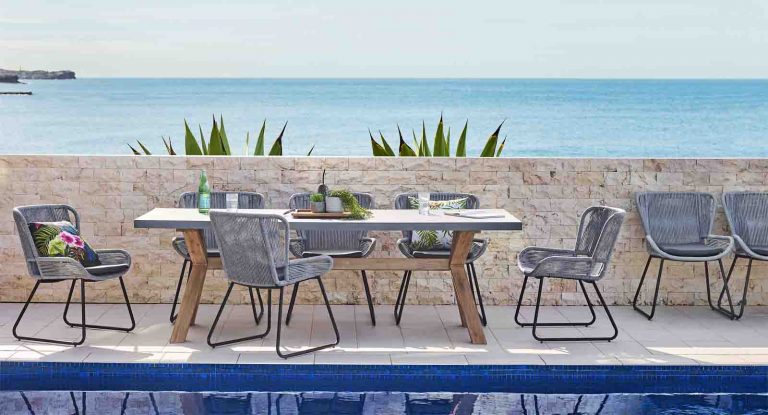
Are there any specific outdoor furniture recommendations for hot and sunny climates?
When choosing outdoor furniture for hot and sunny climates, it’s important to consider materials and features that can withstand the intense heat and sun exposure. Here are some specific recommendations:
1. Heat-Resistant Materials:
Opt for outdoor furniture made from heat-resistant materials such as aluminum, wrought iron, or teak. These materials have the ability to withstand high temperatures without warping or deteriorating.
2. UV-Resistant Fabrics:
Choose outdoor furniture with UV-resistant fabrics for cushions and upholstery. These fabrics are designed to resist fading and damage from prolonged sun exposure.
3. Breathable Fabrics:
In hot climates, it’s essential to choose outdoor furniture with breathable fabrics that allow for air circulation. Look for materials like mesh, quick-drying fabrics, or open-weave designs that promote airflow and help keep you cool.
4. Light Colors:
Light-colored outdoor furniture tends to reflect sunlight rather than absorb it, helping to keep the furniture and seating surfaces cooler. Opt for furniture in neutral or light shades to minimize heat absorption.
5. Shade Options:
Consider outdoor furniture that incorporates built-in shade options. Look for features like umbrellas, canopies, or pergolas that provide shade and protection from direct sunlight.
6. Ventilation and Airflow:
Choose outdoor furniture designs that facilitate ventilation and airflow. Look for slatted designs or furniture with open weaves that allow air to circulate freely, reducing heat buildup.
7. Portable and Versatile:
In hot climates, it can be beneficial to have furniture that is portable and versatile. Look for lightweight pieces that are easy to move and rearrange to take advantage of shade or breeze as the day progresses.
8. Storage Options:
Consider outdoor furniture that offers storage options. This can include built-in storage compartments or furniture that can be easily disassembled and stored during extreme weather conditions or extended periods of non-use.
9. Regular Maintenance:
Proper maintenance is crucial for outdoor furniture in hot and sunny climates. Regularly clean and protect the furniture according to the manufacturer’s instructions to prolong its lifespan and preserve its appearance.
By considering these recommendations, you can select outdoor furniture that is well-suited to hot and sunny climates, providing both comfort and durability in the face of intense heat and sun exposure.
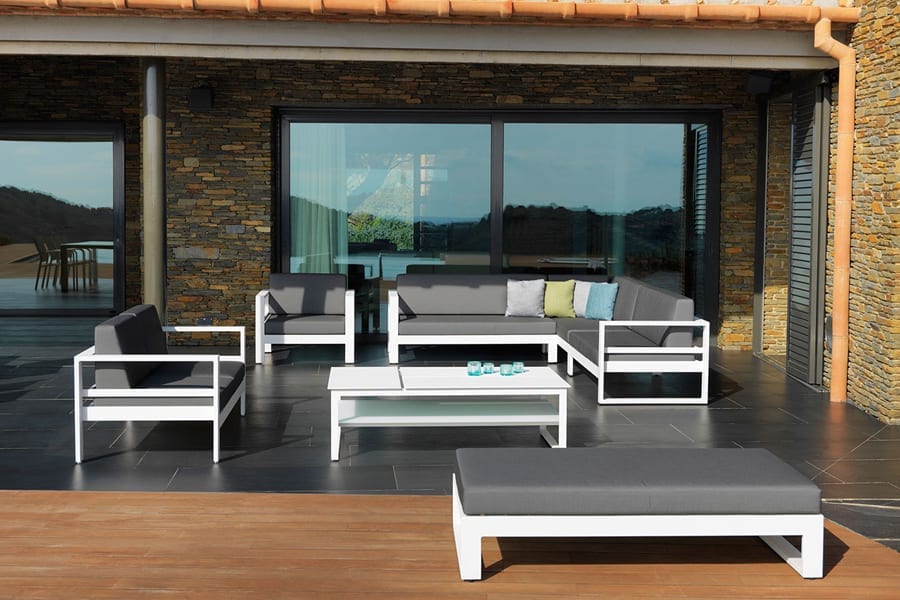
How can I make my outdoor furniture more comfortable with accessories?
If you’re looking to enhance the comfort of your outdoor furniture, there are various accessories you can consider. Here are some ways to make your outdoor furniture more comfortable:
1. Cushions and Pillows: Adding cushions and pillows is one of the easiest ways to make outdoor seating more comfortable. Look for cushions specifically designed for outdoor use, as they are typically made with durable and weather-resistant materials. Choose cushions and pillows in soft, water-resistant fabrics that complement your outdoor décor.
2. Outdoor Rugs: Placing an outdoor rug beneath your furniture can add both comfort and style to your outdoor space. Outdoor rugs provide a soft surface underfoot, making the seating area more inviting. Opt for rugs made from materials that can withstand outdoor conditions, such as polypropylene or natural fibers like sisal or jute.
3. Umbrellas or Shade Sails: If your outdoor space is exposed to direct sunlight, consider adding umbrellas or shade sails to provide shade and relief from the sun’s rays. This can help create a more comfortable and enjoyable seating area, especially during hot summer days. Look for umbrellas or shade sails that are adjustable and made from UV-resistant materials.
4. Outdoor Curtains: Installing outdoor curtains around your seating area can add privacy, create a sense of enclosure, and provide shade. Choose curtains made from outdoor-rated fabrics that are resistant to fading and mildew. You can also opt for sheer curtains to allow for airflow while still providing some privacy.
5. Mosquito Netting: If you frequently deal with mosquitoes or other insects, consider using mosquito netting around your outdoor furniture. This can help create a bug-free zone, allowing you and your guests to relax comfortably without being bothered by pests. Look for netting that is specifically designed for outdoor use and easy to install.
6. Outdoor Throw Blankets: For cooler evenings or during transitional seasons, provide cozy comfort by offering outdoor throw blankets. These can be made from weather-resistant materials or outdoor-friendly fabrics that are easy to clean. Place the blankets on the back of chairs or in a basket nearby for guests to use as needed.
7. Outdoor Lighting: Proper lighting can contribute to the overall comfort and ambiance of your outdoor space. Install outdoor lighting fixtures such as string lights, lanterns, or sconces to create a warm and inviting atmosphere. This will not only enhance the comfort but also extend the usability of your outdoor furniture into the evening hours.
Remember to choose accessories that are specifically designed for outdoor use and can withstand the elements. Regular cleaning and maintenance of the accessories will help ensure their longevity and continued comfort.
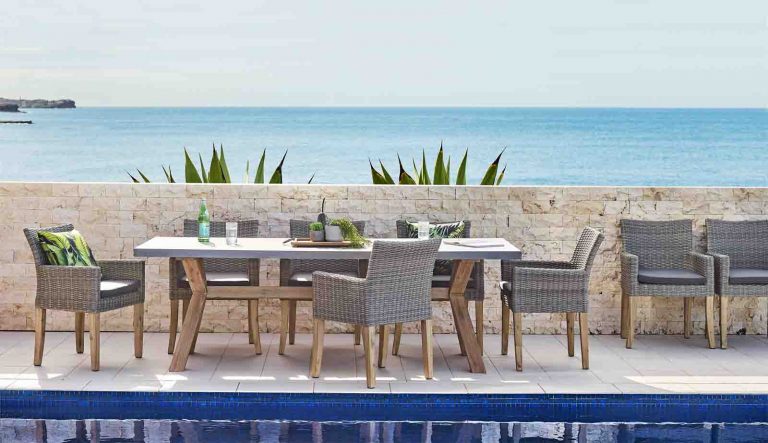
What are the key features to consider when shopping for outdoor furniture?
When shopping for outdoor furniture, there are several key features to consider to ensure you choose the right pieces for your needs and preferences. Here are the key features to keep in mind:
1. Material: The material of the outdoor furniture is crucial as it determines its durability, resistance to the elements, and maintenance requirements. Common materials include teak, aluminum, wrought iron, HDPE wicker, steel, and recycled plastic. Consider the weather conditions, level of maintenance you’re willing to invest, and the desired aesthetic when selecting the material.
2. Comfort: Outdoor furniture should be comfortable for you and your guests to enjoy. Look for features such as ergonomic design, supportive cushions, and adjustable elements like reclining chairs or ottomans. Test the furniture in person, if possible, to ensure it provides the desired level of comfort.
3. Style and Design: Outdoor furniture comes in a variety of styles and designs to suit different tastes and outdoor aesthetics. Consider the overall style of your outdoor space and choose furniture that complements it. Whether you prefer modern, traditional, rustic, or eclectic designs, select furniture that enhances the visual appeal of your patio, deck, or garden.
4. Size and Scale: Before purchasing outdoor furniture, measure the available space and consider the scale of the furniture in relation to the area. Oversized furniture can make a small space feel cramped, while furniture that is too small may look out of place. Ensure the furniture fits well and allows for comfortable movement around it.
5. Functionality: Think about how you plan to use your outdoor space and choose furniture that caters to those needs. Whether you want a dining set for outdoor meals, a lounge area for relaxation, or versatile pieces that can serve multiple purposes, prioritize functionality when selecting outdoor furniture.
6. Maintenance Requirements: Different types of outdoor furniture have varying maintenance requirements. Consider the level of maintenance you’re willing to undertake. Some materials may require regular cleaning, staining, or protective treatments, while others are low-maintenance and only need occasional cleaning. Choose furniture that aligns with your maintenance preferences and capabilities.
7. Budget: Set a budget for your outdoor furniture purchase and consider the quality and longevity of the furniture within that budget. While affordability is important, prioritize quality and durability to ensure your outdoor furniture lasts for years to come.
By considering these key features when shopping for outdoor furniture, you can make informed decisions and select pieces that meet your needs, style, and budget.
editor by CX 2024-04-19
China Good quality Industrial 30bar Oil Free Water Lubrication Vacuum Pump Air Compressor with Best Sales
Product Description
OFAC oil-free screw air compressor used Japanese Mitsui’s original technology, who is the only maintenance service provider in China.
| TECHNICAL DATA |
||||||||||
| Model | Power | Pressure (bar) | Air Flow (m3/min) | Noise Level dBA | Outlet Size | Weight (kgs) | Lubricating Water(L) | Filter Element (B)-(Z) | Dimension LxWxH (mm) | |
| OF-7.5F | 7.5kw | 10hp | 8 | 1.0 | 60 | RP 3/4 | 400 | 22 | (25cm) 1 | 1000*720*1050 |
| OF-11F | 11kw | 15hp | 8 | 1.6 | 63 | 460 | 1156*845*1250 | |||
| OF-15F | 15kw | 20hp | 8 | 2.5 | 65 | RP 1 | 620 | 28 | (50cm) 1 | 1306*945*1260 |
| OF-18F | 18.5kw | 25hp | 8 | 3.0 | 67 | 750 | 33 | 1520*1060*1390 | ||
| OF-22F | 22kw | 30hp | 8 | 3.6 | 68 | 840 | 33 | 1520*1060*1390 | ||
| OF-30F | 30kw | 40hp | 8 | 5.0 | 69 | RP 11/4 | 1050 | 66 | (25cm) 5 | 1760*1160*1490 |
| OF-37F | 37kw | 50hp | 8 | 6.2 | 71 | 1100 | 1760*1160*1490 | |||
| OF-45S | 45kw | 60hp | 8 | 7.3 | 74 | RP 11/2 | 1050 | 88 | 1760*1160*1490 | |
| OF-45F | 45kw | 60hp | 8 | 7.3 | 74 | 1200 | 1760*1160*1490 | |||
| OF-55S | 55kw | 75hp | 8 | 10 | 74 | RP 2 | 1250 | 110 | (50cm) 5 | 1900*1250*1361 |
| OF-55F | 55kw | 75hp | 8 | 10 | 74 | 2200 | (50cm) 7 | 2350*1250*1880 | ||
| OF-75S | 75kw | 100hp | 8 | 13 | 75 | 1650 | (50cm) 5 | 1900*1250*1361 | ||
| OF-75F | 75kw | 100hp | 8 | 13 | 75 | 2500 | (50cm) 7 | 2550*1620*1880 | ||
| OF-90S | 90kw | 125hp | 8 | 15 | 76 | 2050 | (50cm) 5 | 1900*1250*1361 | ||
| OF-90F | 90kw | 125hp | 8 | 15 | 76 | 2650 | (50cm) 7 | 2550*1620*1880 | ||
| OF-110S | 110kw | 150hp | 8 | 20 | 78 | DN 65 | 2550 | 130 | (50cm) 12 | 2200*1600*1735 |
| OF-110F | 110kw | 150hp | 8 | 20 | 78 | 3500 | 130 | 3000*1700*2250 | ||
| OF-132S | 132kw | 175hp | 8 | 23 | 80 | 2700 | 130 | 2200*1600*2250 | ||
| OF-160S | 160kw | 220hp | 8 | 26 | 82 | 2900 | 165 | 2200*1600*2250 | ||
| OF-185S | 185kw | 250hp | 8 | 30 | 83 | DN 100 | 3300 | 180 | (50cm) 22 | 2860*1800*1945 |
| OF-200S | 200kw | 270hp | 8 | 33 | 83 | 3500 | 2860*1800*1945 | |||
| OF-220S | 220kw | 300hp | 8 | 36 | 85 | 4500 | 2860*2000*2300 | |||
| OF-250S | 250kw | 340hp | 8 | 40 | 85 | 4700 | 2860*2000*2300 | |||
| OF-315S | 315kw | 480hp | 8 | 50 | 90 | 5000 | 2860*2000*2300 | |||
F– air cooling method S– water cooling method
The brand “OFAC, OFC” specializes in the R&D, manufacturing, sales and service of compressors, oil-free compressors and air end, special gas compressors, various air compressors and post-processing equipment, providing customers with High-quality, environmentally friendly and efficient air system solutions and fast and stable technical services.
FAQ
Q1: Warranty terms of your machine?
A1: Two year warranty for the machine and technical support according to your needs.
Q2: Will you provide some spare parts of the machines?
A2: Yes, of course.
Q3: What about product package?
A3: We pack our products strictly with standard seaworthy case. Rcommend wooden box.
Q4: Can you use our brand?
A4: Yes, OEM is available.
Q5: How long will you take to arrange production?
A5: Immediate delivery for stock products. 380V 50HZ we can delivery the goods within 3-15 days. Other voltage or other color we will delivery within 30-45 days.
Q6: How Many Staff Are There In your Factory?
A6: About 100.
Q7: What’s your factory’s production capacity?
A7: About 550-650 units per month.
Q8: What the exactly address of your factory?
A8: Our first workshop located in HangZhou, ZheJiang , second workshop located in HangZhou, ZheJiang , China.
| After-sales Service: | 2 Years |
|---|---|
| Warranty: | 2 Years |
| Lubrication Style: | Oil-free |
| Customization: |
Available
|
|
|---|
.shipping-cost-tm .tm-status-off{background: none;padding:0;color: #1470cc}
|
Shipping Cost:
Estimated freight per unit. |
about shipping cost and estimated delivery time. |
|---|
| Payment Method: |
|
|---|---|
|
Initial Payment Full Payment |
| Currency: | US$ |
|---|
| Return&refunds: | You can apply for a refund up to 30 days after receipt of the products. |
|---|
.webp)
Are there special considerations for air compressor installations in remote areas?
Yes, there are several special considerations to take into account when installing air compressors in remote areas. These areas often lack access to infrastructure and services readily available in urban or well-developed regions. Here are some key considerations:
1. Power Source:
Remote areas may have limited or unreliable access to electricity. It is crucial to assess the availability and reliability of the power source for operating the air compressor. In some cases, alternative power sources such as diesel generators or solar panels may need to be considered to ensure a consistent and uninterrupted power supply.
2. Environmental Conditions:
Remote areas can present harsh environmental conditions that can impact the performance and durability of air compressors. Extreme temperatures, high humidity, dust, and corrosive environments may require the selection of air compressors specifically designed to withstand these conditions. Adequate protection, insulation, and ventilation must be considered to prevent damage and ensure optimal operation.
3. Accessibility and Transport:
Transporting air compressors to remote areas may pose logistical challenges. The size, weight, and portability of the equipment should be evaluated to ensure it can be transported efficiently to the installation site. Additionally, the availability of suitable transportation infrastructure, such as roads or air transportation, needs to be considered to facilitate the delivery and installation process.
4. Maintenance and Service:
In remote areas, access to maintenance and service providers may be limited. It is important to consider the availability of trained technicians and spare parts for the specific air compressor model. Adequate planning for routine maintenance, repairs, and troubleshooting should be in place to minimize downtime and ensure the longevity of the equipment.
5. Fuel and Lubricants:
For air compressors that require fuel or lubricants, ensuring a consistent and reliable supply can be challenging in remote areas. It is necessary to assess the availability and accessibility of fuel or lubricant sources and plan for their storage and replenishment. In some cases, alternative or renewable fuel options may need to be considered.
6. Noise and Environmental Impact:
Remote areas are often characterized by their natural beauty and tranquility. Minimizing noise levels and environmental impact should be a consideration when installing air compressors. Selecting models with low noise emissions and implementing appropriate noise reduction measures can help mitigate disturbances to the surrounding environment and wildlife.
7. Communication and Remote Monitoring:
Given the remote location, establishing reliable communication channels and remote monitoring capabilities can be essential for effective operation and maintenance. Remote monitoring systems can provide real-time data on the performance and status of the air compressor, enabling proactive maintenance and troubleshooting.
By addressing these special considerations, air compressor installations in remote areas can be optimized for reliable operation, efficiency, and longevity.
.webp)
How do you maintain proper air quality in compressed air systems?
Maintaining proper air quality in compressed air systems is essential to ensure the reliability and performance of pneumatic equipment and the safety of downstream processes. Here are some key steps to maintain air quality:
1. Air Filtration:
Install appropriate air filters in the compressed air system to remove contaminants such as dust, dirt, oil, and water. Filters are typically placed at various points in the system, including the compressor intake, aftercoolers, and before point-of-use applications. Regularly inspect and replace filters to ensure their effectiveness.
2. Moisture Control:
Excessive moisture in compressed air can cause corrosion, equipment malfunction, and compromised product quality. Use moisture separators or dryers to remove moisture from the compressed air. Refrigerated dryers, desiccant dryers, or membrane dryers are commonly employed to achieve the desired level of dryness.
3. Oil Removal:
If the compressed air system utilizes oil-lubricated compressors, it is essential to incorporate proper oil removal mechanisms. This can include coalescing filters or adsorption filters to remove oil aerosols and vapors from the air. Oil-free compressors eliminate the need for oil removal.
4. Regular Maintenance:
Perform routine maintenance on the compressed air system, including inspections, cleaning, and servicing of equipment. This helps identify and address any potential issues that may affect air quality, such as leaks, clogged filters, or malfunctioning dryers.
5. Air Receiver Tank Maintenance:
Regularly drain and clean the air receiver tank to remove accumulated contaminants, including water and debris. Proper maintenance of the tank helps prevent contamination from being introduced into the compressed air system.
6. Air Quality Testing:
Periodically test the quality of the compressed air using appropriate instruments and methods. This can include measuring particle concentration, oil content, dew point, and microbial contamination. Air quality testing provides valuable information about the effectiveness of the filtration and drying processes and helps ensure compliance with industry standards.
7. Education and Training:
Educate personnel working with compressed air systems about the importance of air quality and the proper procedures for maintaining it. Provide training on the use and maintenance of filtration and drying equipment, as well as awareness of potential contaminants and their impact on downstream processes.
8. Documentation and Record-Keeping:
Maintain accurate records of maintenance activities, including filter replacements, drying system performance, and air quality test results. Documentation helps track the system’s performance over time and provides a reference for troubleshooting or compliance purposes.
By implementing these practices, compressed air systems can maintain proper air quality, minimize equipment damage, and ensure the integrity of processes that rely on compressed air.
.webp)
How is air pressure measured in air compressors?
Air pressure in air compressors is typically measured using one of two common units: pounds per square inch (PSI) or bar. Here’s a brief explanation of how air pressure is measured in air compressors:
1. Pounds per Square Inch (PSI): PSI is the most widely used unit of pressure measurement in air compressors, especially in North America. It represents the force exerted by one pound of force over an area of one square inch. Air pressure gauges on air compressors often display pressure readings in PSI, allowing users to monitor and adjust the pressure accordingly.
2. Bar: Bar is another unit of pressure commonly used in air compressors, particularly in Europe and many other parts of the world. It is a metric unit of pressure equal to 100,000 pascals (Pa). Air compressors may have pressure gauges that display readings in bar, providing an alternative measurement option for users in those regions.
To measure air pressure in an air compressor, a pressure gauge is typically installed on the compressor’s outlet or receiver tank. The gauge is designed to measure the force exerted by the compressed air and display the reading in the specified unit, such as PSI or bar.
It’s important to note that the air pressure indicated on the gauge represents the pressure at a specific point in the air compressor system, typically at the outlet or tank. The actual pressure experienced at the point of use may vary due to factors such as pressure drop in the air lines or restrictions caused by fittings and tools.
When using an air compressor, it is essential to set the pressure to the appropriate level required for the specific application. Different tools and equipment have different pressure requirements, and exceeding the recommended pressure can lead to damage or unsafe operation. Most air compressors allow users to adjust the pressure output using a pressure regulator or similar control mechanism.
Regular monitoring of the air pressure in an air compressor is crucial to ensure optimal performance, efficiency, and safe operation. By understanding the units of measurement and using pressure gauges appropriately, users can maintain the desired air pressure levels in their air compressor systems.


editor by CX 2023-11-16